

Musicians with personal websites see 3x higher fan engagement rates compared to those relying solely on social media. While Instagram and TikTok offer reach, they lack the control and direct connection that independent singer-songwriters need to build lasting careers. This guide reveals how to create a website linked to your Spotify profile, drive genuine fan engagement, and establish a digital presence you truly own.
Key Takeaways
Point | Details |
|---|---|
Full Control | Websites give you 100% ownership of branding, fan data, and content without platform restrictions. |
Spotify Integration | Linking your Spotify profile to your website increases music discovery and boosts profile visits by 20%. |
Higher Engagement | Personal websites drive 3x more fan engagement than relying on social media algorithms alone. |
Revenue Growth | Integrated e-commerce features enable 60% of musicians to increase merchandise sales significantly. |
Quick Setup | Instant website builders let you launch a professional site in minutes without coding knowledge. |
Why Independent Singer-Songwriters Need Personalized Websites
Independent artists face a frustrating reality: your fans are scattered across Spotify, Instagram, TikTok, YouTube, and email. Chasing them across platforms wastes creative energy you should spend making music. A personal website solves this by creating one reliable home for everything you do.
Websites give you 100% control over your brand and domain. You choose colors, fonts, layout, and messaging without worrying about platform redesigns or policy changes. When Instagram updates its algorithm or TikTok changes its terms, your website stays exactly as you designed it.
Social media algorithms are unpredictable enemies of consistent fan engagement. Your posts reach only a fraction of followers unless you pay for promotion. 75% of music listeners use multiple digital channels, making a central hub essential for capturing attention reliably.
A website acts as your career foundation. New fans discover you through streaming or social media, then visit your site to learn more, join your mailing list, and buy merch. You own the relationship from that point forward. No platform can shut down your access or change the rules overnight.
Owning fan data through mailing lists ensures long-term sustainability. When you collect emails directly, you can reach fans anytime without paying for ads or hoping algorithms favor your content. This direct connection becomes invaluable as your career grows.
Pro Tip: Start building your mailing list from day one. Even if you have only 50 fans, those direct email addresses are more valuable than 5,000 social media followers you can’t reliably reach. Consider how social media posting for musicians can complement your website strategy, and explore personalized website solutions for creative professionals to see what’s possible.
How to Integrate Spotify and Other Music Platforms into Your Website
Embedding your Spotify profile on your website creates a seamless listening experience that keeps visitors engaged. Place Spotify players prominently on your homepage so fans can sample your music without leaving your site. This reduces friction and increases the chances they’ll explore your full catalog.
Official Spotify widgets are free and easy to implement. Copy the embed code from Spotify for Artists, paste it into your website builder, and your latest releases appear automatically. The player updates when you release new music, so your site stays current without manual updates.
Here’s how to connect Spotify to your website in five steps:
Log into Spotify for Artists and navigate to your profile page.
Click the three dots menu and select “Share” then “Embed Code.”
Copy the embed code provided by Spotify.
Paste the code into your website’s homepage or dedicated music page.
Preview your site to ensure the player displays correctly and test playback.
Integration supports unified branding by keeping fans in your visual ecosystem. When someone clicks play on your website, they experience your music within your designed space. This reinforces your brand identity far better than sending them to a generic Spotify page.
Linking websites to Spotify boosts profile visits by 20% because you’re creating multiple touchpoints. Fans who discover you on Instagram might visit your website, then click through to follow you on Spotify. Each connection strengthens the relationship.
Pro Tip: Create a dedicated “Music” page that features not just Spotify but also Apple Music, YouTube Music, and Bandcamp embeds. Give fans options while keeping them on your site as long as possible. Learn more about building band web pages with Spotify profiles and discover effective Spotify marketing strategies to maximize your reach.
Website Features That Drive Fan Engagement and Monetization
Mailing lists transform casual listeners into loyal fans. When someone gives you their email address, they’re saying “I want to hear from you directly.” This permission is gold. Send exclusive content, early ticket access, or behind-the-scenes updates that social media algorithms can’t suppress.
Blogs keep your website fresh and give fans reasons to return. Share songwriting stories, tour diaries, or creative process insights. Search engines reward regularly updated content, which helps new fans discover you organically. Even one blog post per month makes a significant difference.
Integrated e-commerce features turn your website into a revenue machine. Musicians with websites report that 60% see merchandise sales increase through integrated online stores. Selling t-shirts, vinyl, or digital downloads directly means you keep more profit than third-party platforms allow

Tour information displayed prominently facilitates higher concert attendance. Fans check your website specifically to find show dates. Make this information impossible to miss with a dedicated tour page or homepage widget showing upcoming performances. Include ticket links and venue details for easy planning.
Combining these features creates multiple revenue streams that compound over time. Here’s how website features directly impact income:
Feature | Revenue Impact | Fan Engagement Benefit |
|---|---|---|
Mailing List | Drives 25% more ticket sales through targeted announcements | Creates direct communication channel |
E-commerce Store | Increases merch revenue by 60% on average | Builds brand loyalty through exclusive items |
Blog Content | Improves SEO, attracting 30% more organic traffic | Deepens fan connection with p ersonal stories |
Tour Calendar | Boosts concert attendance by 15-20% | Centralizes show information in one place |
Pro Tip: Offer a free download or exclusive track in exchange for email signups. This “lead magnet” converts curious visitors into engaged fans who will support future releases. Check out strategies for connecting artists to fans and explore independent artist music discovery methods that work.
Comparing Online Presence Channels: Website, Social Media, and Streaming Platforms
Websites offer ownership and control that platforms can never provide. You decide what appears, how it looks, and how long it stays live. Facebook pages disappear if the company changes policies. Instagram accounts get hacked. Your website remains stable as long as you maintain hosting.
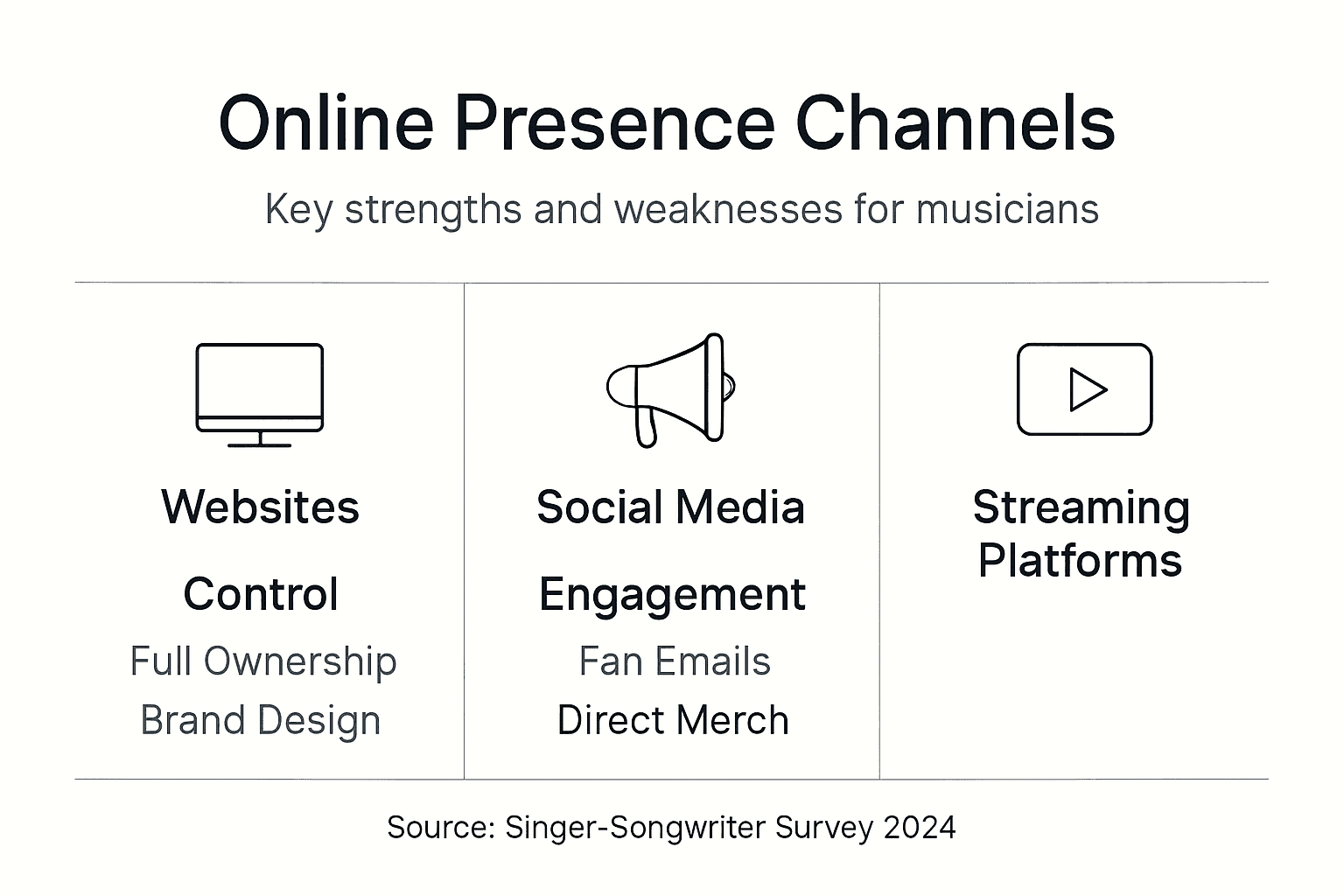
Social media excels at reach but fails at reliability. A viral TikTok can bring thousands of eyes, but those viewers won’t see your next post unless the algorithm approves. 50% of independent musicians report their website as the most reliable platform for retaining fan attention over time.
Streaming platforms lead music discovery but severely limit fan interaction. Spotify helps listeners find your songs through playlists and recommendations. However, you can’t collect email addresses, sell merchandise, or share personal updates there. Streaming is where discovery happens; your website is where relationships deepen.
Here’s how channels compare for independent singer-songwriters:
Channel | Strengths | Weaknesses | Best Use Case |
|---|---|---|---|
Website | Full control, data ownership, monetization | Requires initial setup | Central hub and brand home |
Social Media | Broad reach, viral potential | Algorithm dependency, no ownership | Discovery and engagement |
Streaming Platforms | Music discovery, passive income | Limited interaction, low per-stream pay | Making music accessible |
A diversified approach centered on your website maximizes each channel’s benefits. Use social media to attract attention, streaming platforms to deliver music, and your website to convert casual listeners into paying fans. This strategy protects you from platform changes while building sustainable income.
Decision factors depend on your career stage and technical comfort. New artists benefit most from instant musician websites that integrate everything quickly. Established artists with budgets might invest in custom development. Either way, having a website beats relying solely on rented platform space.
Practical Steps to Build and Maintain Your Music Website
Choose an instant website builder designed specifically for musicians. Generic platforms like Wix or Squarespace work, but music-focused builders understand your needs better. Look for built-in Spotify integration, mailing list tools, and e-commerce features tailored to selling music and merch.
Follow these steps to launch your professional music website:
Select a website builder that offers musician-specific templates and Spotify integration.
Pick a domain name that matches your artist name or brand for easy discovery.
Customize the template design with your photos, colors, and branding elements.
Embed your Spotify profile prominently on the homepage and create a dedicated music page.
Add a mailing list signup form above the fold on your homepage.
Set up an integrated merchandise store with your current products.
Create essential pages: About, Music, Tour Dates, Shop, and Contact.
Write your first blog post introducing yourself and your music journey.
Customize design elements to reflect your unique identity. Your website should feel authentically you, not like a template. Choose fonts that match your genre vibe. Use high-quality photos from recent shoots. Write copy in your natural voice, not corporate marketing speak.
Add mailing list signup forms everywhere: homepage, blog sidebar, after blog posts, and on your contact page. Make the value clear by offering exclusive content, early ticket access, or a free download. Tell visitors exactly what they’ll receive for sharing their email.
Maintain regular content updates to keep fans engaged and search engines happy. Schedule these ongoing tasks:
Update tour dates within 24 hours of booking new shows
Publish one blog post monthly about your creative process
Add new releases to your music page immediately upon launch
Refresh homepage photos quarterly to reflect current projects
Review and respond to contact form messages weekly
Check that all Spotify embeds and links function correctly monthly
Pro Tip: Set calendar reminders for website maintenance tasks. Spending 30 minutes weekly on updates prevents your site from looking abandoned and maintains SEO ranking. Learn how to build a professional musician website quickly and discover essential website maintenance tips for long-term success.
Create Your Professional Music Website Today
Your music deserves a home you control completely. The strategies in this guide only work when you implement them with a professional website that showcases your unique sound and story.
The Digital Fair makes launching your custom music website incredibly simple. Connect your Spotify profile, choose a design that reflects your style, and go live in minutes without coding knowledge. Integrate merchandise sales, collect fan emails, and maintain your site effortlessly with tools built for independent musicians. Explore how to build your site in minutes, check out affordable pricing plans that fit any budget, and discover proven music marketing and Spotify strategies to grow your career.
FAQ
What are the key benefits of having a personal music website?
You gain complete ownership of your fan data, brand identity, and digital presence without platform restrictions. A website serves as your central hub where all music, updates, tour info, and merchandise live in one reliable location. This control protects your career from algorithm changes and platform policy updates that can devastate social media-dependent artists.
How do I link my Spotify profile to my website effectively?
Use official Spotify embed codes available through Spotify for Artists to display your music player directly on your site. Place the embedded player prominently on your homepage and create a dedicated music page for your full catalog. Include direct text links to your Spotify profile throughout your site, especially in your bio and navigation menu, to maximize profile visits and follower growth.
What common mistakes should I avoid when managing my music website?
Neglecting regular content updates makes your site look abandoned and hurts search engine rankings. Always keep tour dates current, maintain active mailing list communication, and publish blog content at least monthly. Customize your design thoughtfully to reflect your unique brand rather than accepting generic templates. Ensure Spotify links and embedded players function correctly by testing them monthly, as broken integrations frustrate fans and lose opportunities.